

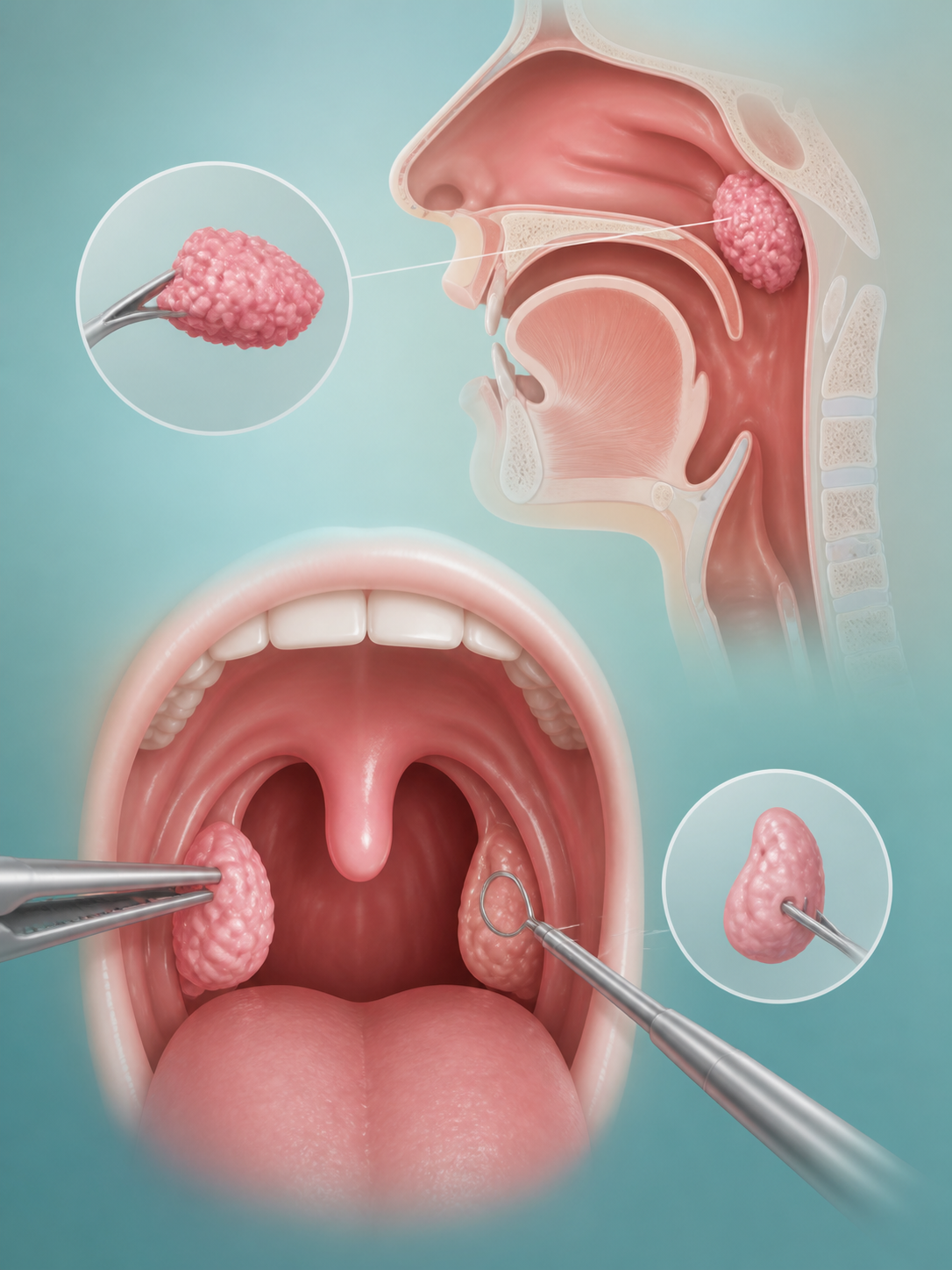
Overview
Adenoid and tonsil surgery is used when enlarged or repeatedly infected tonsils and adenoid tissue affect breathing, sleep, swallowing, or general wellbeing. Op. Dr. Erkan Kulduk assesses the symptoms, examination findings, infection history, and sleep-related complaints before recommending surgery.
Who May Benefit?
Common reasons for evaluation include recurrent tonsillitis, enlarged tonsils, obstructive snoring, sleep-disordered breathing, pauses during sleep, persistent mouth breathing, or enlarged adenoid tissue causing nasal blockage and ear problems.
The Treatment Process
The procedure is performed under general anaesthesia in a hospital environment. The surgical plan is tailored to the patient; in selected cases, partial tissue reduction may be considered instead of complete removal.
Recovery
Sore throat, difficulty swallowing, bad breath, and reduced appetite can occur temporarily. Adequate fluids, prescribed medication, and scheduled follow-up are important during recovery. Children should return to school and activity only when medically appropriate.
Important Note
The decision is made after an individual examination. Persistent snoring or breathing pauses should not be ignored, especially in children.